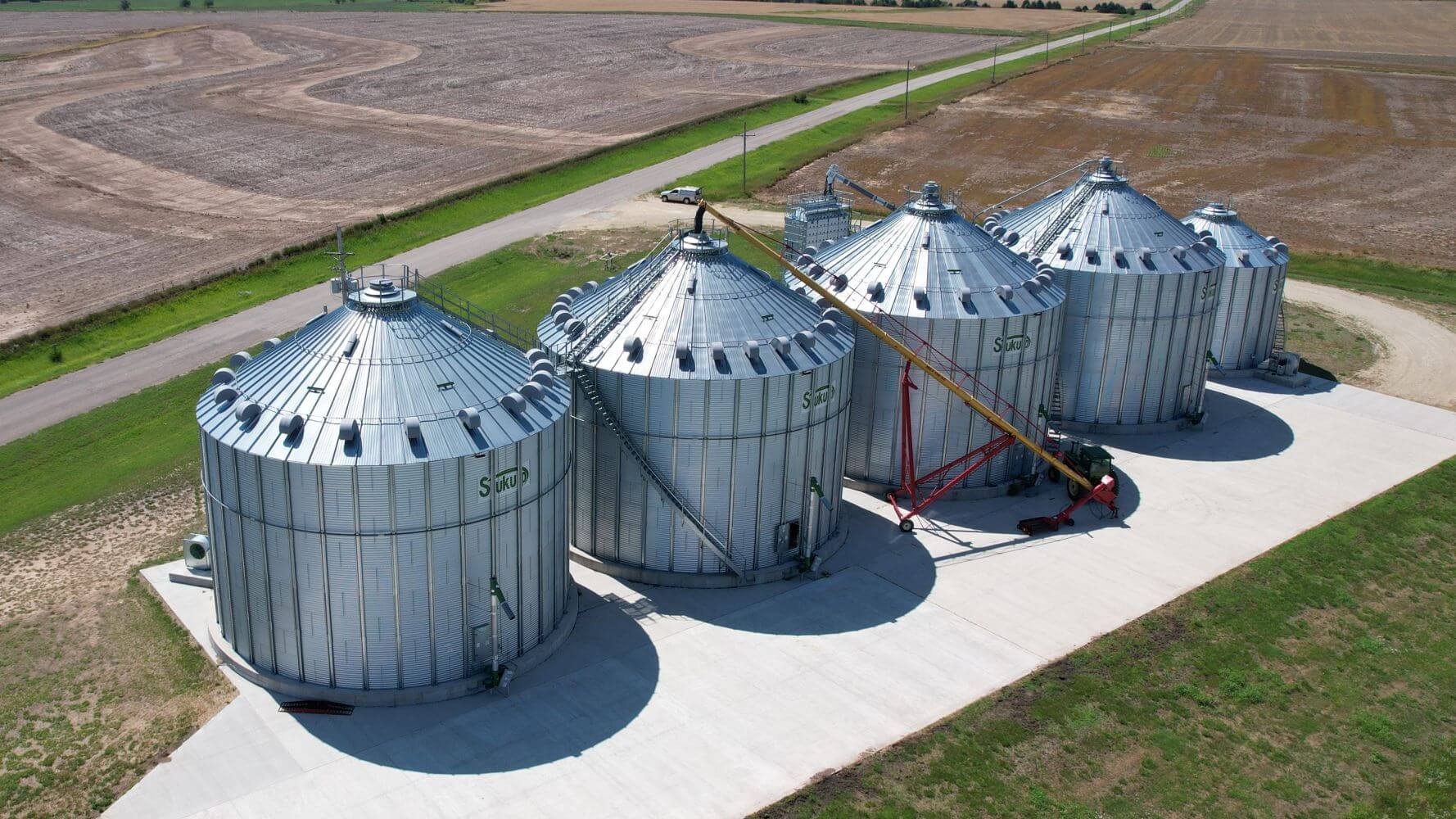
You've got two quotes for a new grain bin, both for about the same size, and one comes in a lot lower than the other. Most people's first thought is to take the lower one and call it good.
Before you do, look at what each quote actually covers. One might be the bin itself and a crew to put it up. The other might also include the foundation, the floor and fans, the unload, and the stairs to get on top. Both can be honest quotes. They just aren't for the same bin.
A bin is part of a system, and the bin itself is only one piece of the quote. If the rest isn't spelled out, those costs can show up later as a change order or a second contractor you weren't planning on. Here's what to check so you know you're comparing apples to apples.
What to check in a grain bin quote
Start with the bin itself, then work from the ground up.
- Bin type. Farm bins, stiffened farm bins, commercial bins, and hopper bottom bins are priced very differently. Make sure every quote is for the same type, not just the same diameter.
Foundation and floor
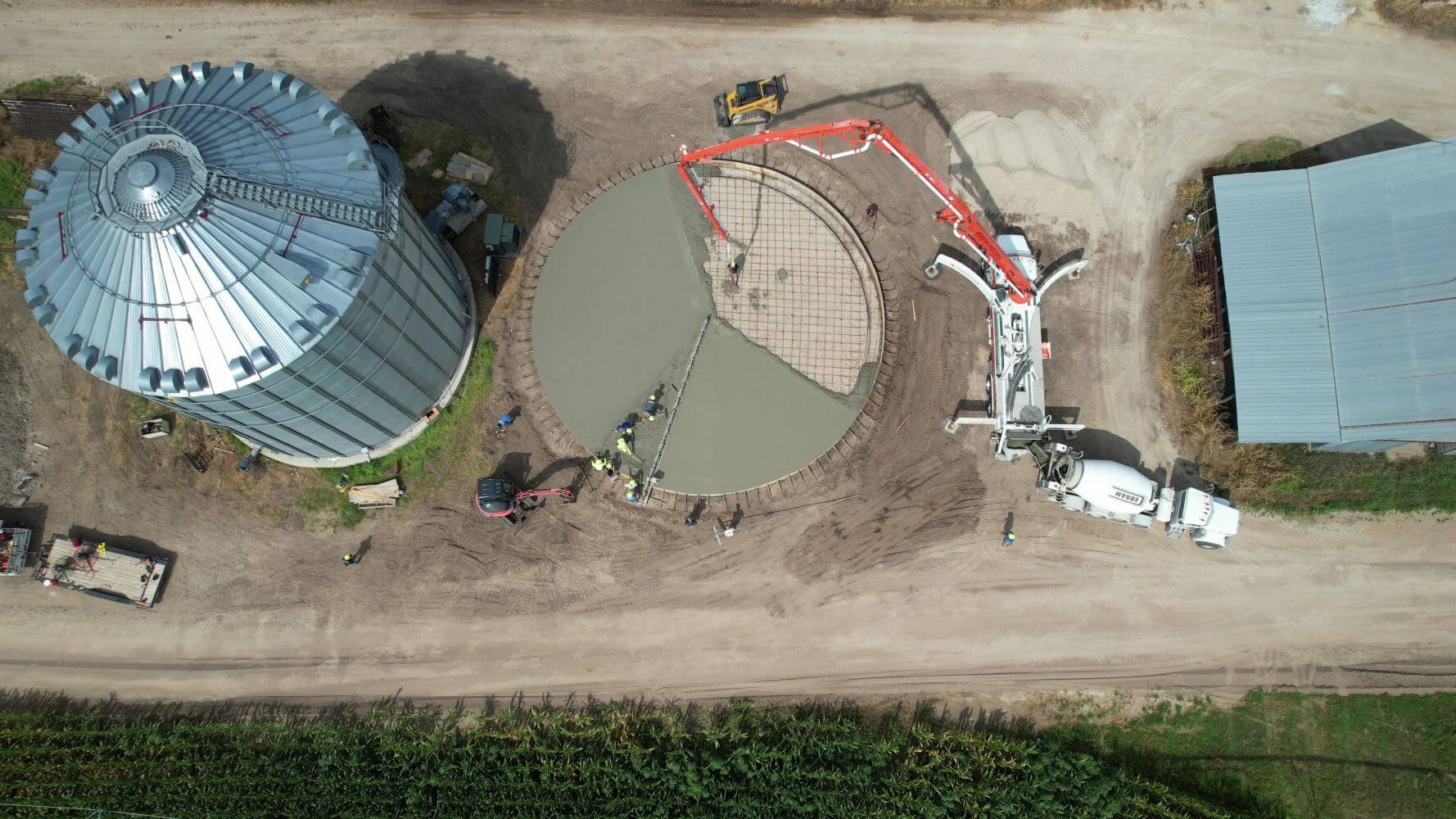
- The foundation. Ask who's pouring it and how it's built. Concrete prices vary from one area to the next. Floor thickness and the height of the foundation walls above ground can also affect the price. Ask what concrete strength and reinforcement are included. SMC typically uses 4,000 PSI concrete with 1/2-inch rebar spaced 18 inches on center, though foundation requirements can vary by project.
- Aeration ducts. Check whether ducts or tunnels are included in the foundation and whether they're sized appropriately for the bin.
- Floor and supports. The floor design and support structure can make a significant difference in the total price and cost per bushel, especially on smaller bins.
Air, monitoring, and unloading
- Fans and heaters. Axial fans cost less than centrifugal fans, and 3-phase fans can cost less than single-phase. Heater options vary too, so make sure every quote is pricing the same setup.
- Monitoring. Basic temperature cables cost less than combined temperature and moisture cables, and a fully automated monitoring system is another step up.
- Unloading. A standard tube unload, a power sweep, and a Sukup paddle sweep are very different in price, and in how much work they save you when it's time to empty the bin.
Roof, access, and handling
- Roof and vents. Count the roof vents and check the roof's load rating. Stiffened bins can step up to an 8K roof, and commercial bins to a 15K or 30K roof. If you might add handling equipment overhead later, ask about the peak lid.
- Stairs and access. Compare sidewall stairs versus a caged ladder, roof stairs versus roof handrails, and whether a peak walkaround platform is included.
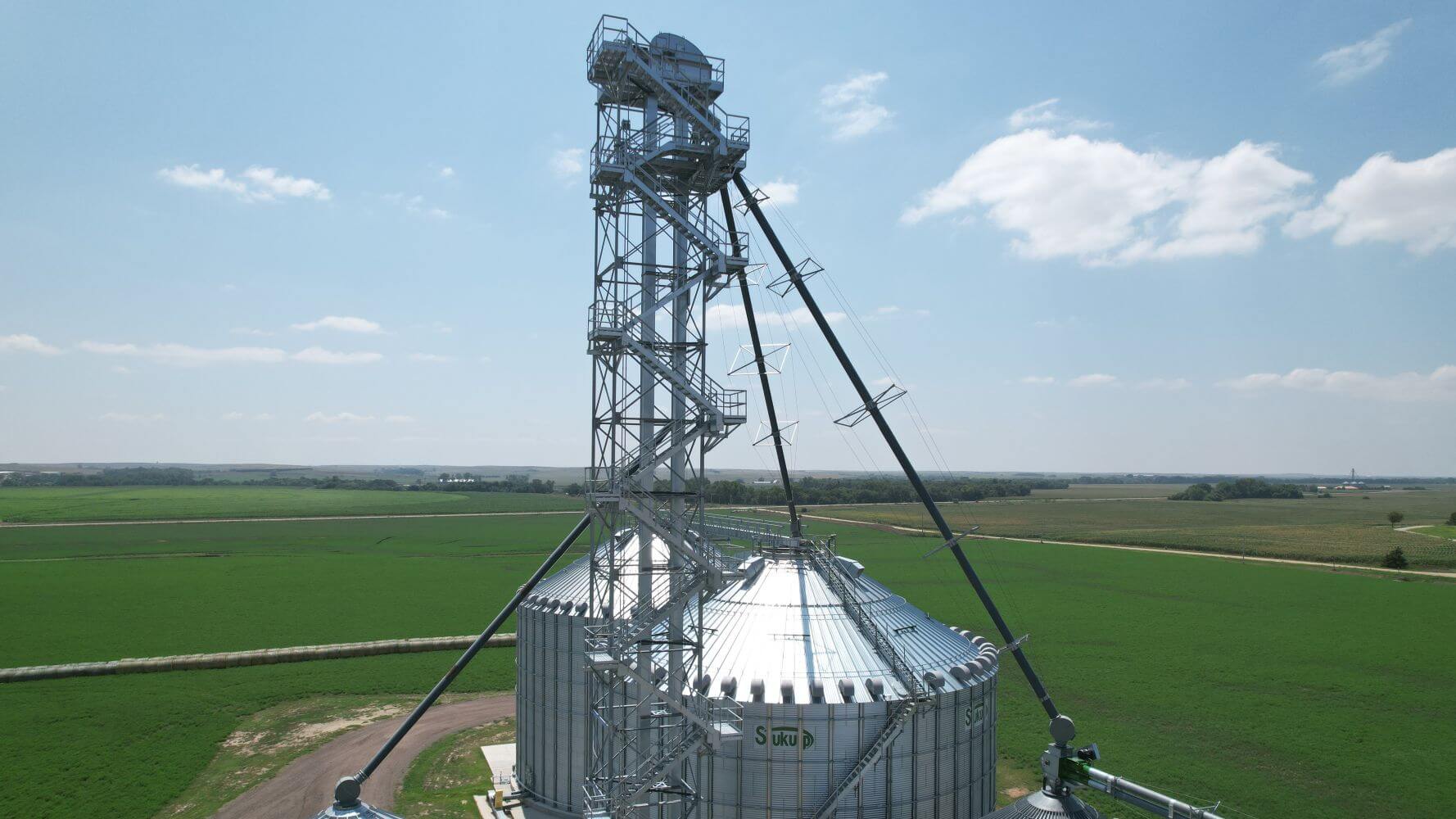
- Handling and drying. Compare augers, conveyors, legs, and distributors, along with how the new bin ties into your existing setup. If a quote includes a dryer, compare the type and capacity, since those make a big difference in price.
Two quotes for the same size bin can be far apart depending on how much of this they include.
Site work and permits
- Power to the site. Fans, dryers, and handling equipment all need electrical service. Bringing utility power to a new bin site can be a significant expense, and it may not be included in the builder's quote. Ask what's covered and who is responsible for coordinating the electrical work. SMC can coordinate the electrical work, so you're not tracking down an electrician on your own.
- Site layout. Where the bin sits affects truck traffic, future expansion, and how it ties into your other bins. SMC can help with layout and design as part of planning your project.
- Dirt work. Some quotes assume the site will be level and ready when the crew shows up. If dirt work isn't written in, ask who's doing it.
- Permits. Ask who handles them. SMC can handle permitting when a project needs it.
- Freight and delivery. Check whether delivery is included in the price or added later.
Sales tax
Sales tax can affect the total cost of a grain bin project. Kansas and Nebraska have different rules for how materials, equipment, and labor are taxed. Ask each builder how sales tax is calculated in the quote and whether it's included in the total price. Check with your tax advisor about how the rules apply to your project.
Warranty
Ask whether there's a written workmanship warranty and what it covers. It's part of what you're paying for, and it protects the investment long after the crew leaves.
6 questions to ask before signing
- What is included in this price, and what will cost extra?
- Is this quote for a farm, stiffened, or commercial bin?
- Is the electrical work included, and who is responsible for it?
- How is sales tax figured in this quote?
- Is there a written workmanship warranty?
- What would trigger a change order once work begins?
Any builder worth hiring will be glad you asked.
How SMC quotes a bin project
We start by talking through what you're storing, what's working in your current setup, and where you want your operation to be in a few years. From there, we put together a quote that outlines the work, from the foundation and floor to the roof, unloading equipment, and how the new bin ties into your existing setup.
SMC is a Sukup dealer. Our crews pour the foundations, operate the cranes, and build the bins, with dirt work handled when a project requires it. One team sees the build through from the ground up.
When it's time for a repair or an addition, you'll be working with people who already know your site and your operation.
See what's included in an SMC grain bin system on our grain bins page.
Have a bin quote you want to compare, or are you planning storage for next harvest? Call the SMC team at 785-781-4383 or visit smckansas.com.
